EN
EN

Pourquoi les valises médicales en EVA sont-elles essentielles pour la protection des kits et la conformité réglementaire
Amortissement, isolation thermique et biocompatibilité de la mousse EVA de qualité médicale
La mousse EVA de qualité médicale assure un amortissement fiable pour les instruments sensibles pendant le transport et l'utilisation quotidienne. Sa structure fermée absorbe efficacement l'énergie d'impact, protégeant ainsi les moniteurs portables, les instruments chirurgicaux et les dispositifs diagnostiques contre les dommages causés par les vibrations, les chocs et la compression. Cette même structure offre une isolation thermique passive, contribuant à maintenir des températures internes stables pour les contenus sensibles à la température, tels que les réactifs ou les capteurs étalonnés. Par ailleurs, l'EVA de qualité médicale est biocompatible : il répond aux normes ISO 10993 relatives au contact cutané et à la compatibilité avec le champ stérile, sans composés extractibles ni réactions cytotoxiques. L'ensemble de ces propriétés garantit l'intégrité des dispositifs — de l'entreposage au transport, puis jusqu'au déploiement au point de soins.
Conforme aux normes ISO 13485 et aux normes reconnues par la FDA pour l'emballage des dispositifs
La conformité réglementaire n’est pas facultative — elle est fondamentale. Les principaux fabricants d’étuis en EVA conçoivent et valident leurs produits dans le cadre de systèmes de management de la qualité certifiés ISO 13485, garantissant ainsi la traçabilité, des contrôles de production constants et des protocoles de validation documentés. Ces étuis sont également conformes aux normes de consensus reconnues par la FDA, notamment l’ASTM D4169 pour les essais de distribution et l’ISO 11607 pour les emballages destinés aux dispositifs médicaux stérilisés de façon terminale, ce qui démontre leurs performances dans des conditions réelles de manutention, de stérilisation et de durée de conservation. Cette double conformité offre aux cliniciens et aux équipes d’approvisionnement la confiance nécessaire quant à la contribution effective de l’étui à la sécurité des dispositifs, à la prévention de la contamination et à la préparation aux audits.
Conception d’étuis personnalisés en EVA pour la fonctionnalité clinique et l’assurance de la stérilité
Inserts en mousse découpés au CNC de précision pour les équipements chirurgicaux, diagnostiques et de surveillance
Les étuis personnalisés en EVA reposent sur des inserts en mousse découpés au moyen d'une fraiseuse à commande numérique (CNC) pour maintenir les instruments avec une précision au millimètre près. Le fraisage piloté par ordinateur crée des cavités parfaitement adaptées aux scalpels, aux accessoires endoscopiques, aux sondes échographiques et aux composants des pompes à perfusion, éliminant ainsi tout mouvement susceptible de provoquer des micro-dégâts, une contamination croisée ou un désalignement. Pour les équipements de surveillance complexes tels que les défibrillateurs ou les systèmes EEG, la mousse profilée répartit l’énergie d’impact sur toute la surface plutôt que de concentrer les contraintes en un seul point. Cette précision facilite également un accès rapide et intuitif : les professionnels de santé retrouvent systématiquement l’outil adéquat du premier coup — un facteur critique dans les flux de travail chronophages des salles d’opération (SAR) et des unités de soins intensifs (USI). Lorsqu’ils sont associés à des protocoles de nettoyage validés, ces inserts préservent à la fois la stérilité et la disponibilité fonctionnelle.
Composants autoclavables, résistance à la désinfection et traitements de surface antimicrobiens
Une utilité clinique réelle exige plus qu’un simple amortissement des chocs : elle requiert une résilience tout au long du cycle complet de décontamination. Les étuis haute performance en EVA intègrent des plateaux en mousse autoclavables (validés pour jusqu’à 20 cycles à 134 °C / 273 °F conformément à la norme ISO 17665), qui conservent leur forme, leur densité et leur fonction protectrice après stérilisation. Les surfaces intérieures sont souvent traitées avec des agents antimicrobiens homologués par l’EPA (par exemple, à base d’ions argent ou de composés d’ammonium quaternaire), inhibant la croissance bactérienne sur les matériaux en mousse et les revêtements intérieurs, sans compromettre leur biocompatibilité. Par ailleurs, les coques extérieures sont fabriquées dans des polymères résistants aux désinfectants, spécifiquement conçus pour supporter des nettoyages répétés à l’aide d’alcool isopropylique à 70 %, de solutions d’eau de Javel et d’agents à base de peroxyde d’hydrogène — sans se fissurer, s’opacifier ou se délaminer. Ces caractéristiques intégrées préservent l’intégrité hygiénique dans les couloirs hospitaliers, les cliniques mobiles et les environnements opérationnels exigeants.
Optimiser les performances des étuis en EVA dans les environnements de soins de santé
Fonctionnalités prêtes pour le terrain : fermetures à glissière étanches, validation d’absorption des chocs et fermetures pour déploiement rapide
Dans des environnements dynamiques ou imprévisibles — ambulances, zones sinistrées, actions de santé publique en milieu rural — la mallette EVA doit fonctionner comme un équipement critique pour la mission. Des fermetures à glissière étanches, dotées de joints en polyuréthane thermoplastique (TPU), empêchent toute pénétration de liquides lors d’une exposition à la pluie, de pulvérisations de décontamination ou de renversements accidentels, préservant ainsi la stérilité interne. Les performances d’absorption des chocs sont validées — et non supposées — grâce à des essais normalisés de chute selon la méthode 516.6 de la norme MIL-STD-810G (chute en transit), simulant des chutes réelles depuis une hauteur de 1,2 mètre sur une surface en béton — une référence sectorielle pour la manutention sur le plancher des ambulances et dans les soutes d’hélicoptères. Enfin, des systèmes de fermeture permettant un déploiement rapide — tels que des loquets à action unique, des joints magnétiques ou des fermetures à glissière à tirette — permettent un accès à une main, en moins de trois secondes, aux dispositifs vitaux. Il ne s’agit pas de simples commodités : ce sont des choix de conception fondés sur des preuves, destinés à réduire la charge cognitive, à accélérer la réponse et à renforcer le contrôle des infections.
Sélectionner la mallette en EVA adaptée à l’usage : services d’urgence, cliniques mobiles et intervention en cas de catastrophe
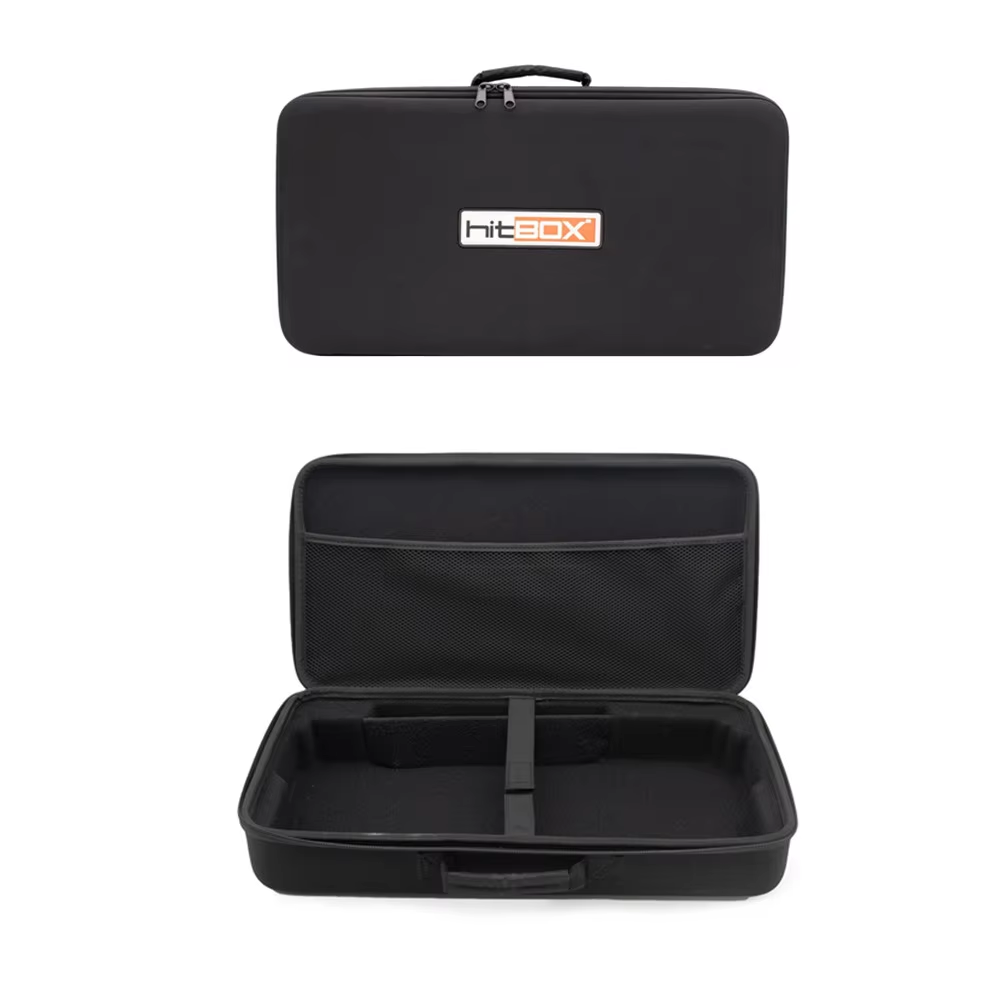
Les environnements de soins de santé imposent des exigences opérationnelles spécifiques — et la mallette EVA adaptée reflète ces priorités. Dans les salles d’urgence, la rapidité et la clarté sont primordiales : les mallettes sont dotées de mécanismes d’ouverture à une main, de zones d’étiquetage à fort contraste et d’agencements en mousse compartimentés, optimisés pour les trousses de traumatologie, les outils de gestion des voies respiratoires et le matériel de réanimation cardiorespiratoire. Les cliniques mobiles privilégient l’ergonomie et l’adaptabilité : coques légères (moins de 4,5 kg chargées complètement), sangles rembourrées pour le port à l’épaule et systèmes de mousse modulaires capables d’accueillir, sans nécessiter de refonte, les équipements évolutifs de télémédecine ou de diagnostic point-of-care. En cas de réponse aux catastrophes, la robustesse et l’étanchéité environnementale priment : joints certifiés IP67, renforts aux coins, coques stabilisées contre les UV et mousse traitée antimicrobiennement garantissent un fonctionnement fiable dans la poussière, l’humidité, les températures extrêmes et lors de déploiements prolongés sur le terrain. Dans les trois contextes, la mousse découpée sur mesure reste indispensable — non seulement pour la protection, mais aussi pour le contrôle des stocks, la cohérence de la formation du personnel et la traçabilité réglementaire.
FAQ
Pourquoi la mousse EVA de qualité médicale est-elle importante pour la protection des dispositifs ?
La mousse EVA de qualité médicale offre un amortissement, une isolation thermique et une biocompatibilité, garantissant ainsi que les dispositifs sensibles sont protégés contre les chocs et les vibrations pendant le transport et répondent aux normes relatives au champ stérile.
À quelles normes de conformité les étuis en EVA sont-ils conformes ?
Les étuis en EVA sont conformes aux normes ISO 13485 et aux normes reconnues par la FDA, telles que les normes ASTM D4169 et ISO 11607, afin d’assurer leur fiabilité lors du transport, de la stérilisation et dans les conditions de conservation.
Quelles caractéristiques sont importantes pour les étuis en EVA utilisés en réponse aux catastrophes ?
La robustesse et l’étanchéité environnementale sont essentielles : joints certifiés IP67, angles renforcés et traitements antimicrobiens conçus pour résister à la poussière, à l’humidité et aux températures extrêmes.
Table des matières
- Pourquoi les valises médicales en EVA sont-elles essentielles pour la protection des kits et la conformité réglementaire
- Conception d’étuis personnalisés en EVA pour la fonctionnalité clinique et l’assurance de la stérilité
- Optimiser les performances des étuis en EVA dans les environnements de soins de santé
- Sélectionner la mallette en EVA adaptée à l’usage : services d’urgence, cliniques mobiles et intervention en cas de catastrophe
- FAQ