 EN
EN

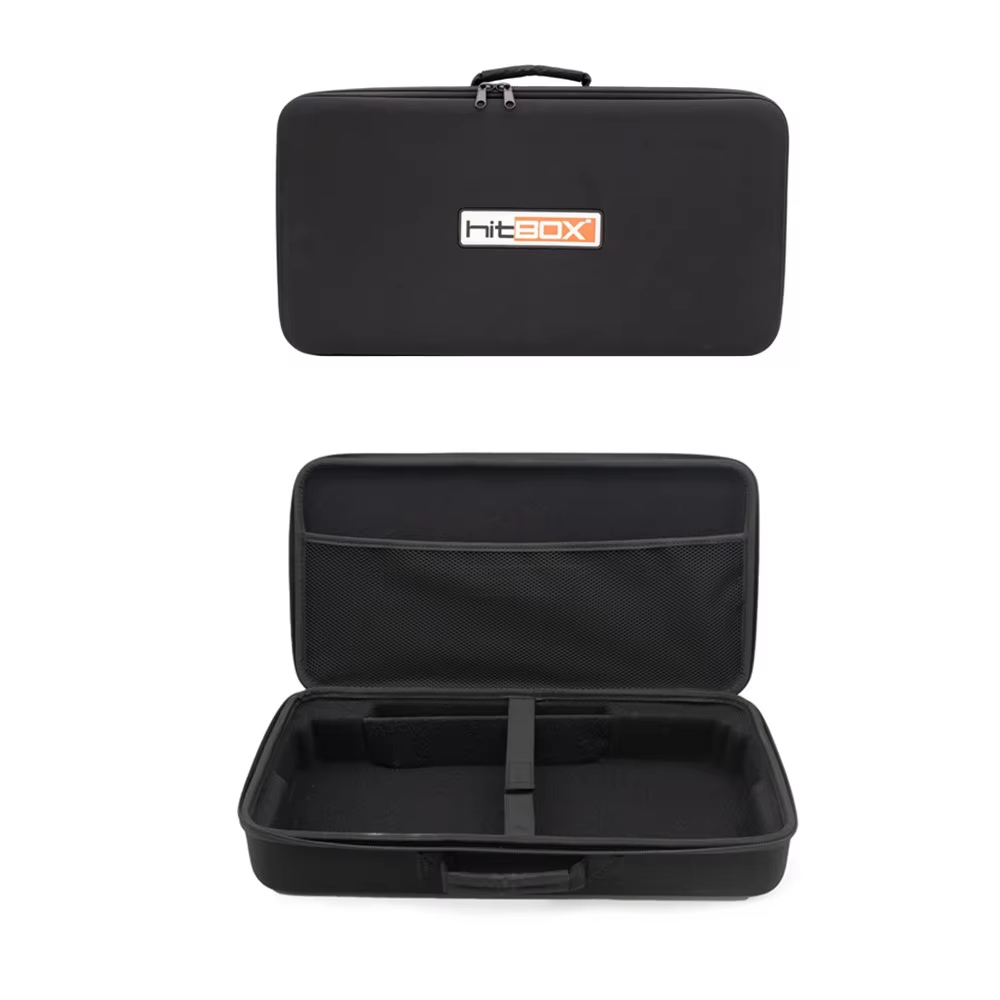
What Is an EVA Case? Material Science and Core Advantages
Chemical Composition and Density Range (0.08–0.35 g/cm³) Enable Precision Cushioning
EVA cases are built from ethylene-vinyl acetate copolymer—a tunable thermoplastic foam where vinyl acetate content (typically 10–40%) governs flexibility, resilience, and density. This allows precise engineering across a broad density range: 0.08–0.35 g/cm³. Lower-density variants deliver pliable, high-compliance cushioning ideal for delicate electronics; higher densities provide structural rigidity for heavy-duty equipment like aerospace instrumentation or medical imaging hardware. Critically, EVA’s viscoelastic behavior dissipates 70–90% of impact energy through internal molecular friction—outperforming standard polyethylene foams by 25% in compression recovery (ASTM D3575). That energy dissipation translates directly to reduced G-force transmission, making EVA the material of choice where vibration damping and shock mitigation are mission-critical.
Closed-Cell Structure Delivers Inherent Water, UV, and Chemical Resistance
EVA’s closed-cell architecture—comprising discrete, gas-filled microcells—creates a natural barrier against moisture, vapors, and environmental contaminants. Unlike open-cell polyurethane foams, it resists absorption entirely: independent testing confirms full waterproof integrity after 72-hour submersion (ASTM D3575). Its cross-linked polymer backbone also delivers exceptional UV stability, retaining 92% of tensile strength after 1,000 hours of QUV accelerated weathering—far surpassing polystyrene foams that embrittle under sunlight. Chemically inert across oils, weak acids, and alkalis, EVA eliminates the need for supplemental sealants or laminated coatings. This inherent robustness reduces case weight by up to 40% versus coated alternatives while ensuring reliable performance across extreme environments—from desert heat to offshore salinity.
EVA Case vs. Common Foam Alternatives: PE, PU, and EPS
EVA vs. Polyethylene (PE): Compression Recovery, Low-Temp Flexibility, and Weight Efficiency
EVA outperforms PE in three decisive functional areas. First, its elastic recovery prevents permanent deformation: while PE compresses irreversibly under sustained load, EVA rebounds fully—ensuring consistent protection over repeated use. Second, EVA retains flexibility down to –20°C; PE stiffens and cracks at low temperatures, compromising integrity during cold-chain transport. Third, EVA achieves superior cushioning per unit weight—its optimized density range (0.08–0.35 g/cm³) delivers high impact resistance without excess mass. For drone kits, field-deployed diagnostics tools, or portable medical devices, this weight-efficiency ratio is non-negotiable.
EVA vs. Polyurethane (PU): Open-Cell Absorption vs. Closed-Cell Impact Isolation
PU foam’s open-cell structure invites moisture, dust, and microbial ingress—leading to long-term degradation and compromised protection. EVA’s closed-cell design inherently blocks these threats while delivering superior mechanical performance: per ASTM D1564, it dissipates 70–90% of shock energy at 2–5 psi, significantly exceeding PU’s absorption capacity and slow recovery rate. Though PU may feel softer on initial contact, its protection degrades rapidly with cycling. By contrast, expanded polystyrene (EPS) offers only single-use crush protection—it collapses on impact and cannot be reused. EVA’s durability, reusability, and consistent isolation make it the clear long-term investment for high-value protective packaging.
Performance Metrics That Matter for EVA Cases
Shock Absorption: 70–90% Energy Dissipation at 2–5 psi (Per ASTM D1564)
ASTM D1564 testing validates EVA’s core protective function: under controlled impact pressures of 2–5 psi, it consistently dissipates 70–90% of kinetic energy. This occurs via controlled cell-wall collapse and viscous flow within the polymer matrix—absorbing peak force rather than transmitting it. Medium-density EVA (100–180 kg/m³) strikes the optimal balance between cushioning compliance and load-bearing stability, making it the standard for precision enclosures housing optics, sensors, and circuitry vulnerable to micro-fractures or solder joint fatigue.
Durability Benchmark: 5,000+ Compression Cycles Without Degradation
EVA cases maintain dimensional and functional integrity through 5,000+ full compression cycles—demonstrating no measurable loss in thickness, rebound velocity, or energy absorption capacity. This endurance reflects intrinsic molecular elasticity: unlike brittle or creep-prone foams, EVA’s cross-linked chains realign predictably after stress release. As a result, it sustains protection across years of demanding use—whether in stacked industrial tool cases, repeatedly opened medical equipment kits, or field-deployed communication gear subjected to daily handling, vibration, and stacking loads.
When to Choose a Custom Molded EVA Case Over Generic Foam Liners
Exact-Fit Protection, ESD-Safe Options, and Multi-Density Zoning for Sensitive Gear
Custom molded EVA cases are essential when protecting high-value, sensitive, or mission-critical assets—where generic foam liners fall short in precision, consistency, and functionality.
Exact-Fit Protection: Thermally molded EVA conforms to ±0.5 mm tolerances, eliminating internal movement—the leading cause of transit damage in poorly fitted cases. Packaging Digest (2023) attributes 37% of in-transit equipment failure to shifting within generic enclosures; custom EVA’s “cocoon effect” mitigates this risk entirely.
ESD-Safe Options: Integrated conductive layers deliver surface resistances of 10⁶–10⁹ ohms—meeting ANSI/ESD S20.20 requirements. Standard foams lack this capability, leaving sensitive electronics exposed to static discharge during handling or storage.
Multi-Density Zoning: Strategic layering of EVA densities (0.08–0.35 g/cm³) enables targeted protection: firmer zones support heavy components; softer buffers cradle fragile connectors or lenses. Generic liners—uniform in density—over-cushion some areas while under-protecting others, adding bulk without benefit.
| Feature | Custom EVA Case | Generic Foam Liner |
|---|---|---|
| Contour Accuracy | ±0.5mm tolerance | Up to 5mm gaps |
| ESD Protection | Integrated conductive layers | Not available |
| Vibration Dampening | Multi-zone frequency tuning | Uniform dampening |
| Reusability Cycle Rating | 5,000+ compressions | ≤1,500 compressions |
For assets valued above $5,000—or deployed in extreme thermal, humidity, or electromagnetic environments—custom EVA delivers measurable ROI: fewer damage claims, longer equipment service life, and assured compliance with industry-specific safety and performance standards.
FAQ
What is EVA foam made of?
EVA foam is manufactured from ethylene-vinyl acetate copolymer, where vinyl acetate content affects the material's flexibility, resilience, and density.
Why is EVA preferred over other foam alternatives?
EVA foam offers superior shock absorption, water resistance, UV stability, and temperature flexibility compared to polyethylene (PE), polyurethane (PU), and expanded polystyrene (EPS).
What industries benefit from using EVA cases?
Industries such as aerospace, electronics, medical devices, and tools rely on EVA cases for their durability, customizability, and protective properties.
Can EVA cases be customized?
Yes, EVA cases can be thermally molded for exact-fit protection, include ESD-safe options, and incorporate multi-density zones for enhanced functionality.
How durable are EVA cases?
EVA cases can endure 5,000+ compression cycles without degradation, offering excellent long-term protection.
