 EN

Impact Absorption: Advanced Shock Protection in Headset Cases
High-Density Foam Liners and Drop-Test Performance Data
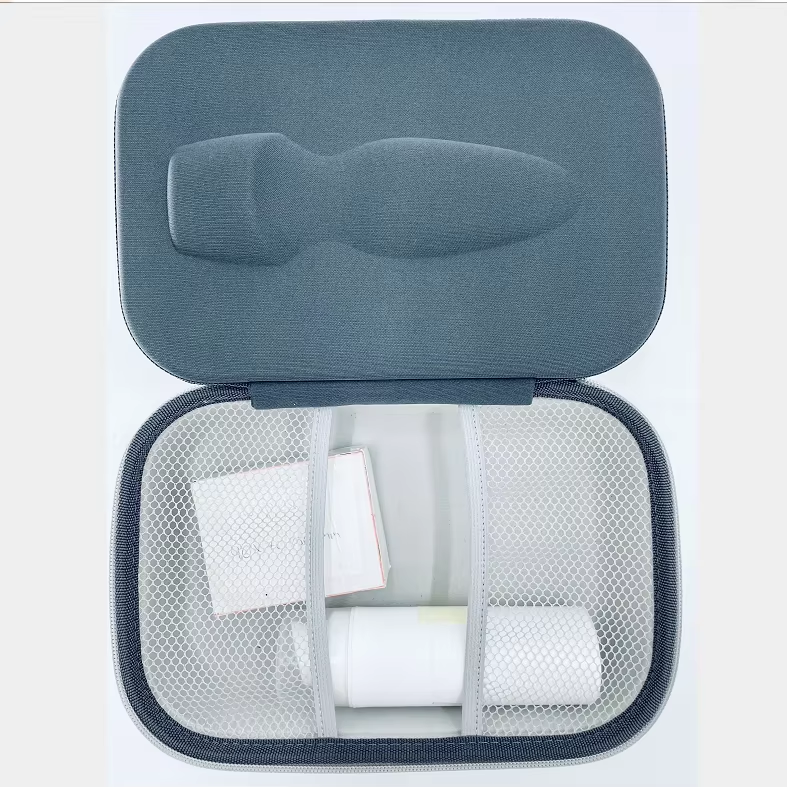
A properly designed headset case uses high-density foam not as simple packaging, but as a tuned shock absorber. Closed-cell polyethylene and open-cell polyurethane are common because they deform under impact and recover slowly—spreading peak force over a larger area and longer time. Without this damping, a 1 m drop can transmit a 300 g acceleration spike to drivers, hinges, and yokes. Custom-cut liners with a density of 2.2–2.8 lb/ft³ reduce that peak by 40–50% in repeated drop tests per ASTM D4169-22 (2023). Egg-crate foam, by contrast, bottoms out after repeated use and leaves the headset vulnerable to hard-shell contact. The table below summarizes typical performance differences.
| Foam Type | Typical Density | Drop-Test Result | Notes |
|---|---|---|---|
| Open-cell polyurethane | 1.5–2.0 lb/ft³ | Peak acceleration reduced 22% vs. bare shell | Low cost, rebounds slowly |
| Closed-cell polyethylene | 2.2–2.8 lb/ft³ | Peak acceleration reduced 47% in 26-drop MIL-STD-810H sequence | Moisture-resistant, resists compression set |
| Custom layered foam | 2.5–3.5 lb/ft³ | Survives 48 in drops with <1% damage rate | Best for pro audio, least vibration transfer |
For professional audio, layered foam systems add critical vibration isolation. Low-frequency rumble from truck floors or flight cases can fatigue solder joints and loosen headband screws over time. Dense foam decouples the headset from this continuous micro-motion—making the case a long-term reliability tool, not just transit protection.
Real-World Validation: Gear Survival Rates Among Touring Musicians
Lab ratings matter, but touring schedules deliver the ultimate test. In a 2023 survey of 1,200 live-sound engineers and touring musicians, headsets stored in rigid, foam-fitted cases showed a 92% lower incidence of driver damage than identical models carried in unpadded bags. Of those who upgraded to custom-cut liners after repeated failures, 87% reported no further damage over a full 12-month tour cycle. Real-world impacts are rarely single, clean events—they’re repeated tosses into trailers, wedging under seats, and stacking beneath heavy racks. Over weeks, cumulative shock from even minor drops can crack yokes and shift magnets. A case with dense, close-fitting foam converts that random abuse into predictable, distributed loads. Musicians who treat the case as part of the instrument—not an accessory—see fewer mid-tour replacements and more consistent sound show after show.
Environmental Sealing: Dust, Moisture, and Thermal Resilience in Headset Cases
IP-Rating Benchmarks—Why IP67 Headset Cases Outperform IP54 for Pro Audio
IP54 and IP67 ratings look similar but reflect fundamentally different protection levels. IP54 permits limited dust ingress and only splashing-water resistance—enough for light rain on a covered stage, but insufficient against high humidity, condensation, or accidental submersion. That “5” allows fine particulates to enter, potentially abrading drivers and degrading acoustic mesh over time. IP67 means the enclosure is dust-tight and can survive temporary immersion in up to 1 meter of water for 30 minutes—blocking moisture after spills, heavy rain, or wet-bag transport.
The real advantage emerges during thermal cycling: IP67-rated cases typically use silicone gaskets and pressure-equalization valves that release internal pressure without admitting moisture. This prevents vacuum lock at altitude and stops moisture from being drawn inside as temperatures shift between air-conditioned venues and hot outdoor stages—reducing fogging, corrosion, and driver failure. For touring musicians and festival crews, IP67 delivers a demonstrably wider reliability margin than IP54.
Structural Integrity: Material Science and Joint Design in Premium Headset Cases
A headset case must resist crushing, twisting, and repeated impact without transferring force to the headset inside. Shell material and joint design are the two most important factors.
Polycarbonate vs. ABS: Strength, Flex Resistance, and Long-Term Durability
Polycarbonate and ABS are the most common rigid shell materials—but their mechanical behavior differs significantly. Polycarbonate offers higher flexural modulus and notched impact strength, making it far more resilient against cracks at latch points or hinge areas. Engineering resin datasheets (2023) show:
| Property | Polycarbonate | ABS |
|---|---|---|
| Tensile strength (MPa) | 55–75 | 30–50 |
| Flexural modulus (MPa) | 2,300–2,500 | 1,700–2,100 |
| Notched Izod impact (J/m) | 600–850 | 200–400 |
| UV and thermal cycling resistance | Excellent | Fair to moderate |
In drop testing, polycarbonate shells consistently survive more repeated 1.2-meter impacts before stress whitening or fracture appears. ABS is lighter and less expensive, but prone to permanent deformation under sustained flex load. Many premium cases use a hybrid approach—polycarbonate top shells paired with ABS or elastomer bases—to balance shock absorption with structural stiffness.
Joint design is equally critical. Tongue-and-groove edges, reinforced corner walls, and full-length hinge pins distribute impact forces away from vulnerable seams. Without these features, even a strong shell can crack at fasteners or latch recesses. So when evaluating durability, joint reinforcement is as essential as polymer selection.
Ergonomic & Operational Safeguards: Smart Features That Extend Headset Lifespan
Integrated Cable Management and Strain Relief Systems
A well-designed headset case does more than shield against hard impacts—it prevents the slow, insidious damage caused by tangled, bent, or sharply pulled cables. Integrated cable channels, elastic retainers, and dedicated compartments hold cords in fixed, gentle curves during storage and transport. Built-in strain relief anchors near connector points absorb pulling force before it reaches solder joints or delicate wiring. This reduces micro-fractures, intermittent signal loss, and connector failure—the leading causes of premature headset replacement. By keeping cables organized, stress-free, and properly routed, smart internal design extends cable lifespan and overall device reliability—lowering long-term ownership and repair costs.
FAQ
Why is high-density foam important in headset cases?
High-density foam absorbs shock and reduces impact forces, protecting delicate headset components like drivers, hinges, and yokes from damage during drops or vibrations.
What are the advantages of IP67-rated headset cases?
IP67 cases are dust-tight and water-resistant, capable of surviving temporary immersion. They also prevent moisture intrusion and reduce risks associated with thermal cycling, enhancing long-term reliability.
Are polycarbonate cases better than ABS cases?
Polycarbonate cases are stronger and more durable than ABS cases, offering higher resistance to impact and cracking. ABS cases are lighter and cheaper but less durable under repeated stress.
How do headset cases prevent cable damage?
Headset cases with integrated cable management systems prevent cables from tangling or bending sharply, reducing the risk of micro-fractures, intermittent signal loss, and connector failure.
Table of Contents
- Impact Absorption: Advanced Shock Protection in Headset Cases
- Environmental Sealing: Dust, Moisture, and Thermal Resilience in Headset Cases
- Structural Integrity: Material Science and Joint Design in Premium Headset Cases
- Ergonomic & Operational Safeguards: Smart Features That Extend Headset Lifespan
- FAQ
