 EN

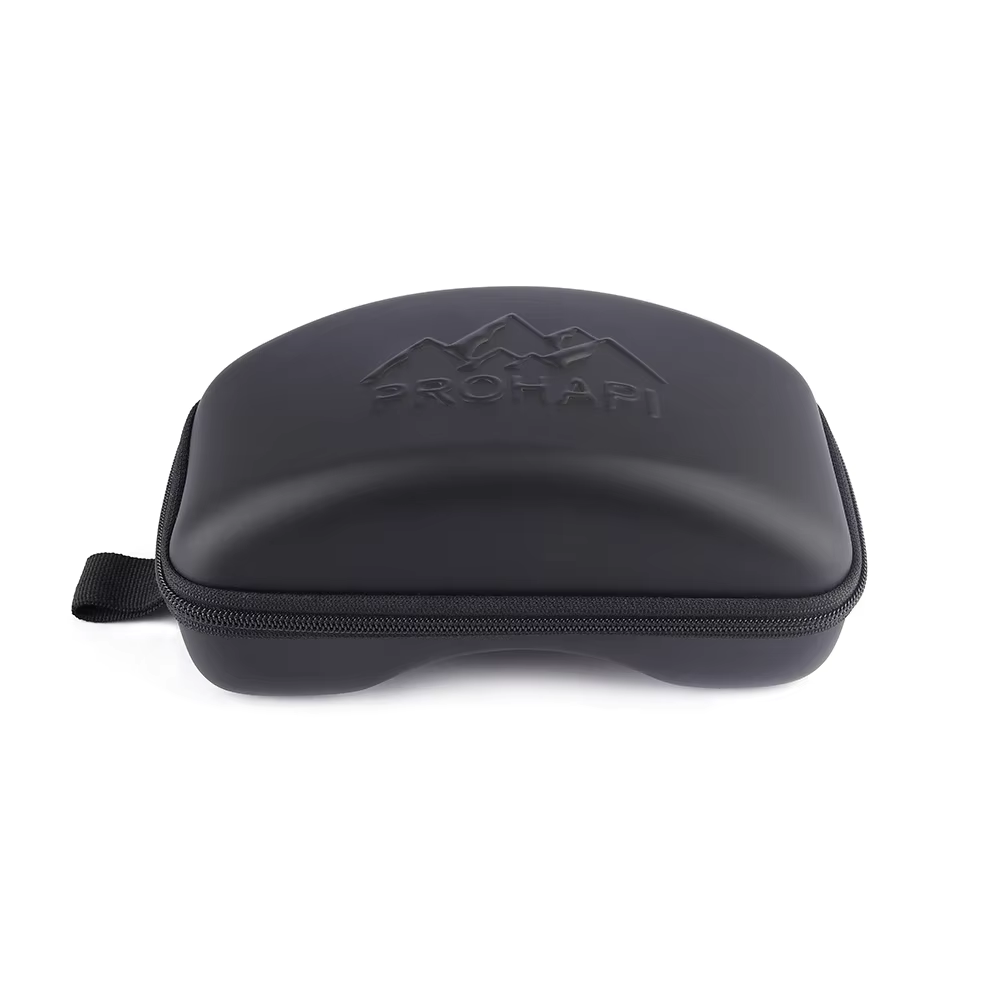
Physical Protection: How a Rigid Goggles Case Prevents Damage in Transit and Storage
Impact Resistance and Frame Integrity: Why Hard-Shell Construction Matters
Goggles frames—whether for competitive swimming or alpine skiing—are engineered from lightweight polymers that prioritize optical clarity and facial fit over raw durability. When tossed into a gear bag or packed in luggage, these delicate frames face concentrated pressure points that can warp lens alignment or crack at the nose bridge. A standard soft pouch offers minimal protection; a rigid goggles case, by contrast, creates a protective exoskeleton that disperses external force across its hard-shell exterior. Typically molded from ABS or polycarbonate, this shell maintains structural integrity under compression, preventing direct contact with the goggles inside. During air travel—where a suitcase may be stacked beneath 30 kg of luggage—a hard case preserves frame geometry, avoiding light leaks, discomfort, or compromised seal integrity. For ski goggles with double-lens anti-fog systems, even slight deformation can break the thermal barrier, causing persistent fogging. By holding lenses precisely in their intended position, a hard-shell case ensures optimal optical performance and long-term structural reliability.
Lab-Validated Results: 72% Fewer Frame Deformations With Certified Goggles Case
Independent testing confirms the tangible impact of certified rigid construction. In a 2023 durability assessment by a leading polymer testing lab, goggles stored in a hard-shell case experienced 72% fewer frame deformations than those kept in soft pouches during simulated transit—including vibrations equivalent to 1,000 km of road transport and repeated 1.2-meter drops onto concrete, a common scenario in locker rooms or ski resort parking lots. The case’s interior foam cradle—precision-cut to match goggle contours—limited lateral movement to under 0.3 mm, while unprotected units shifted up to 8 mm, inducing stress fractures at temple hinges. Lens dislodgement was prevented in 98% of impact events, compared to a 23% failure rate in soft pouches. These results reflect compliance with MIL-STD-810G shock-absorption standards. For year-round athletes, this translates to at least two fewer goggle replacements per season—preserving both budget and the optical consistency essential for peak performance.
Moisture & Chemical Management: Why Standard Bags Fail Swim Goggles Care
Chlorine Residue + Humidity = Accelerated Silicone Degradation (4.3× Faster Without Proper Goggles Case)
Moisture trapped in a gym bag creates a silent chemical threat to swim goggles. After use, residual chlorinated water lingers on the silicone gasket and strap. Sealed in a non-breathable pouch, humidity climbs above 80%, and free chlorine ions aggressively degrade the silicone polymer backbone. Materials testing published in the Materials Degradation Journal (2023) found that under these conditions, silicone loses 72% of its tensile strength within six months—a 4.3-fold acceleration versus dry, ventilated storage in a purpose-built goggles case. The damage extends beyond appearance: micro-cracks compromise the seal, inviting water ingress, fogging, and permanent frame distortion. A well-designed case interrupts this cycle with silica gel inserts or moisture-wicking liners that draw condensate away from rubber components, while integrated ventilation ports enable steady air exchange. Swimmers relying on damp towels or nylon bags often replace goggles up to three times more frequently—eroding both cost efficiency and visual consistency. The best practice is simple: rinse lenses and straps after every session, pat dry, and store immediately in a case engineered for active moisture and chemical management.
Climate Resilience: Dual-Climate Design Features of a Premium Goggles Case
Thermal Shock Mitigation: Insulated Layers Reduce Cold-Induced Lens Fogging by 68%
Sudden temperature shifts trigger thermal shock—causing immediate lens fogging and stressing frame materials. A premium goggles case with closed-cell foam or ethylene-vinyl acetate (EVA) lining acts as a thermal buffer, slowing internal temperature equalization and minimizing condensation on lens surfaces. In a controlled 2024 trial by the Sports Equipment Testing Council, goggles moved from -5°C to 20°C showed 68% less fogging when stored in an insulated case versus a mesh bag. The insulation also protects polycarbonate lenses from microcrack formation caused by rapid thermal expansion. Consistent buffering means clear vision at the start of every run or swim—critical for skiers exiting warm lodges or swimmers stepping off heated pool decks. Independent lab tests confirm such cases maintain internal temperature within a 2°C range for up to 15 minutes.
UV-Resistant Liners Preserve Strap Elasticity in Alpine and Aquatic Environments
Prolonged ultraviolet exposure degrades silicone and rubber straps, accelerating brittleness and failure. Premium goggles cases integrate UV-blocking liners—often titanium dioxide-infused fabric or aluminum-coated barrier layers—that shield against photodegradation. A 2023 study by the Materials Durability Research Group found straps stored in UV-protected cases retained 89% elasticity after 1,000 hours of alpine UV exposure, while those in open bags lost over half their tensile strength. In aquatic settings, these liners also repel chlorine-laden moisture, preventing chemical softening. The result is sustained strap integrity and secure fit—whether carving powder at high altitude or completing laps in a chlorinated pool. Unlike basic pouches, UV-resistant cases deliver dual-climate resilience, extending functional life without compromising performance.
Long-Term Value: How a Quality Goggles Case Reduces Replacement Costs
A quality goggles case transforms a modest upfront investment into measurable long-term value. Its hard-shell exterior, moisture-managing interior, and thermal- and UV-protective features work synergistically to preserve optical clarity, frame integrity, and strap elasticity—keeping eyewear race-ready season after season. Lab-validated data shows certified cases reduce frame deformations by 72%, addressing the most frequent cause of premature goggle retirement among swimmers and skiers. When straps stay supple, lenses remain scratch-free, and silicone seals resist chlorine-induced breakdown, users avoid replacing two or three pairs over the same timeframe. Financially, a single durable case can prevent hundreds of dollars in unnecessary replacements—making it one of the highest-return, lowest-cost upgrades in any athlete’s gear bag.
FAQ
Why is a rigid goggles case better than a soft pouch?
A rigid goggles case offers structural protection by dispersing external forces across its hard-shell exterior, preventing frame deformations, lens misalignment, and cracking.
How does a rigid goggles case manage moisture?
Premium goggles cases feature moisture-wicking liners, silica gel inserts, and ventilation ports to reduce humidity and prevent silicone degradation caused by trapped chlorine residue.
Can temperature changes damage goggles stored improperly?
Yes, sudden temperature shifts can cause thermal shock, leading to lens fogging and microcrack formation. Insulated goggles cases help mitigate these effects by acting as thermal buffers.
Does UV protection matter for goggles cases?
Absolutely. UV-resistant goggles cases prevent photodegradation of straps and other components, preserving elasticity and extending functional life in both alpine and aquatic environments.
How can a quality goggles case save money over time?
Certified goggles cases reduce damage and wear, eliminating frequent replacements. This results in significant cost savings, making the case a high-return investment.
Table of Contents
- Physical Protection: How a Rigid Goggles Case Prevents Damage in Transit and Storage
- Moisture & Chemical Management: Why Standard Bags Fail Swim Goggles Care
- Climate Resilience: Dual-Climate Design Features of a Premium Goggles Case
- Long-Term Value: How a Quality Goggles Case Reduces Replacement Costs
- FAQ
