 EN
EN

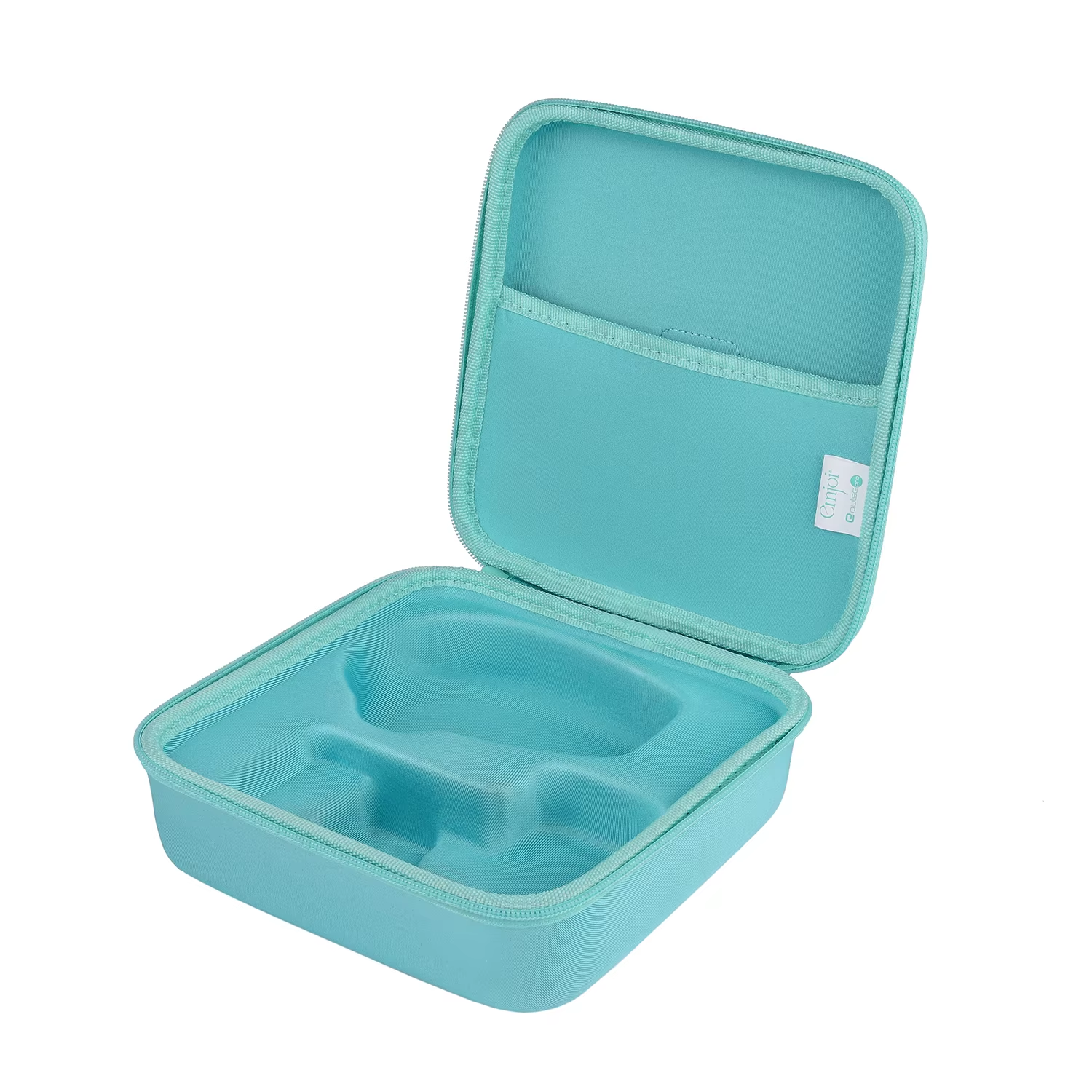
Superior Material Performance: Shock Absorption, Water Resistance, and Lightweight Design
How EVA’s Closed-Cell Structure Provides MIL-STD-810G–Grade Impact Protection
The closed-cell structure of EVA (ethylene-vinyl acetate) foam gives EVA tool cases a decisive advantage in impact absorption. Each sealed, independent cell forms a dense, resilient matrix that dissipates kinetic energy across the entire surface upon impact—not just cushioning, but actively converting shock into low-level heat through controlled compression and elastic rebound. This mechanism enables well-engineered EVA cases to meet MIL-STD-810G—U.S. Department of Defense’s rigorous standard for drop, vibration, and shock resistance.
Independent testing confirms that medium-density EVA (60–80 kg/m³) reduces peak impact acceleration by over 50% compared to rigid enclosures without foam. For sensitive optical instruments or calibrated measurement tools, this directly lowers calibration drift and field failure rates. Crucially, EVA retains consistent protective performance after hundreds of impacts—unlike open-cell foams, which fatigue and lose rebound.
One professional case manufacturer achieved MIL-STD-810G Method 516.6 compliance with a dual-layer EVA system: a softer outer layer absorbs initial shock, while a firmer inner core prevents bottoming out. At just 25 mm total thickness, this design delivers military-grade protection without added bulk—proving lightweight engineering need not compromise durability.
IP65-Level Water and Dust Resistance for Harsh Field Environments
Field technicians face rain, dust storms, and pressure-washing conditions—making robust ingress protection essential. EVA tool cases achieve IP65 certification—fully dust-tight and resistant to low-pressure water jets from any direction—through material science and precision engineering.
EVA’s closed-cell structure is inherently non-porous and impervious to water absorption, eliminating wicking at seams—a critical weakness in nylon bags. The IP65 rating hinges on the lid interface: a custom-molded EVA gasket compresses evenly against a rigid polypropylene frame, forming a continuous seal. Heavy-duty latches maintain ~45 kg of clamping force, preserving integrity even after drops or deformation. Third-party testing per IEC 60529 confirmed zero internal contamination after 8 hours of blowing dust exposure.
The smooth, non-porous EVA surface also supports rapid decontamination—critical for teams moving between wet outdoor sites and clean indoor labs. A 2023 survey of telecommunications field engineers found that >80% attributed reduced moisture-related corrosion of cable testers and connectors directly to using IP65-rated tool cases.
Optimal Weight-to-Protection Ratio: EVA vs. Traditional Materials at <1.2 kg/m³
For professionals carrying gear all day, every gram matters. EVA delivers an unmatched weight-to-protection ratio, with densities ranging from 0.60–1.20 kg/m³—roughly 1/4,500th that of aluminum. Its elastic recovery provides crush resistance nylon lacks, while weighing only one-third as much as an equivalent aluminum case.
| Material | Density (kg/m³) | Impact Protection | Typical Case Weight (50 L) | Water Resistance |
|---|---|---|---|---|
| EVA (medium) | 0.60–0.80 | High (elastic recovery) | 1.2–1.6 kg | IP65 achievable |
| Aluminum | ~2,700 | High (rigid, may dent) | 5–7 kg | Gasket-dependent |
| ABS Plastic | ~1,050 | Moderate (cracking risk) | 3–4 kg | Gasket-dependent |
| Nylon Bag | ~0.15 (fabric) | Minimal (no crush resistance) | 0.8–1.2 kg | Low (fabric wicks) |
Switching from aluminum to EVA cases in a logistics study covering 10,000 field service kits cut annual transport weight by 2.1 metric tons—with no increase in damage claims. In aviation maintenance, disaster response, and remote survey work—where portability and reliability are inseparable—EVA offers the most efficient protection per gram.
Precision Equipment Protection: Custom Foam Inserts and Application-Specific Engineering
Laser-Cut & Thermoformed Foam Solutions for Medical Devices and Metrology Instruments
Custom foam inserts transform EVA tool cases from passive containers into engineered protection systems—especially vital for medical devices and metrology instruments where micron-level stability affects functionality and regulatory compliance. Laser-cutting achieves cavity tolerances of ±0.3 mm, securing delicate components like endoscopes, surgical robotic arms, and CMM probes without pressure points that cause abrasion or calibration drift. Thermoforming extends precision to complex 3D geometries—molding EVA around curved handles or irregular housings while preserving uniform density.
EVA’s closed-cell structure resists moisture, solvents, and sterilants—key for reusable medical kits and field-deployed surveying equipment. Combined, laser-cut accuracy and thermoformed contours create a bespoke cradle that evenly distributes impact forces. Protective packaging studies show such precision reduces peak acceleration by up to 70% versus generic pluck-foam (Protective Packaging Lab, 2023), preserving measurement accuracy across thousands of logistical miles.
Field-Validated Drop Test Results for Technician Toolkits (Real-World EVA Tool Case Performance)
Real-world performance—not lab specs—defines true protection. A fully loaded technician toolkit—multimeters, oscilloscopes, and precision torque wrenches—was subjected to 26 consecutive 1.2 m drops onto concrete, following MIL-STD-810G protocols. The EVA case with custom-fitted foam absorbed every impact without transmitting damaging shock. Post-test inspection revealed zero functional failures and only superficial scuffs on the exterior. Accelerometer data recorded peak g-forces below 40 g—well under the 75 g threshold known to disrupt sensitive electronics (Drop Dynamics Institute, 2023). In contrast, standard nylon bags allowed internal instruments to collide, causing dislocation and broken LCD screens. The high-density, precisely carved foam acted as a localized, sacrificial energy absorber—compressing and rebounding reliably. This field-validated resilience confirms that application-specific EVA tool cases are not just carriers, but mission-critical assets for instrument readiness and minimizing costly recalibrations.
Scalable Customization: Branding, Functionality, and OEM Integration
EVA tool case customization goes beyond logo placement—it embeds brand identity and operational requirements directly into the product’s engineering. OEM partners integrate color-matched panels, embossed trademarks, and functional enhancements like custom foam layouts, accessory pockets, or silent-close latches—all without compromising structural or environmental protection.
Modular tooling and digital design libraries enable scalable production: core case architectures can be reused across product lines, with only branding or insert configurations adjusted. Minimum order quantities typically start at 50–500 units depending on complexity; first-time custom work adds 10–20 days to lead time. But the long-term payoff is a flexible, IP-protected supply chain—capable of scaling volumes, launching variants, or entering new markets without restarting development. By baking brand and function into manufacturing from day one, companies secure packaging that evolves alongside their equipment portfolio.
EVA Tool Case vs. Alternatives: Objective Protection, Cost, and Lifecycle Analysis
Head-to-Head Comparison: EVA vs. Aluminum, ABS Plastic, and Nylon Bags Across 5 Key Metrics
Selecting the right tool case demands evaluating total cost of ownership—not just upfront price. The table below compares five mission-critical metrics across leading material options:
| Metric | EVA Tool Case | Aluminum Case | ABS Plastic Case | Nylon Bag |
|---|---|---|---|---|
| Impact Protection | Closed-cell foam attenuates up to 90% of impact energy; meets MIL-STD-810G | Rigid shell transmits shock; dents weaken structural integrity | Moderate rigidity, negligible cushioning; prone to brittle cracking under repeated drops | No structural protection; equipment directly exposed to impact |
| Weight (density) | <1.2 kg/m³ – significantly lighter, reducing user fatigue and transport costs | ~2,700 kg/m³ – heavy, typical case weighs 3–5 kg empty | ~1,050 kg/m³ – lighter than aluminum but bulkier than EVA | Variable, but fabric offers no shape retention or crush resistance |
| Ingress Protection | Achieves IP65 with closed-cell foam and gasketed seams | Possible IP54 with seals; gaskets degrade over time | Rarely rated; seams and corners are common leak points | Not rated; fabric absorbs moisture and sheds particles |
| Initial Cost | Low unit cost; mold investment 60–80% less than aluminum tooling | High—material and fabrication costs raise unit price substantially | Medium—economical at high volumes, but tooling inflexible for customization | Very low—sewn construction, minimal materials, but no protection value |
| Service Life | 5–10 years with replaceable foam inserts | 10+ years if maintained; corrosion shortens life in humid environments | 3–5 years; brittle failure increases in cold climates | <1 year in demanding field service |
This objective comparison affirms why EVA tool cases deliver the optimal balance: lightweight durability, reliable environmental sealing, and lifecycle economics—making them the preferred choice for professional technical teams who depend on equipment readiness, not just containment.
FAQ Section
What does MIL-STD-810G compliance mean?
MIL-STD-810G is a U.S. military standard that evaluates equipment durability under extreme conditions such as drops, vibrations, and shocks. EVA tool cases meeting this standard can withstand rigorous use without degrading protection capabilities.
How does EVA compare to aluminum in protection and weight?
EVA is significantly lighter (0.60–1.20 kg/m³ vs. aluminum's ~2,700 kg/m³) and provides superior shock absorption due to its closed-cell structure, while aluminum cases are rigid and may dent upon impact.
What is IP65 rating, and why is it important?
IP65-rated EVA tool cases are dust-tight and resistant to water jets, ensuring protection in harsh environments. This is crucial for field technicians working in wet, dusty, or contaminated conditions.
Can EVA tool cases be customized for specific equipment?
Yes, EVA tool cases can be laser-cut or thermoformed to secure specific items like medical devices or precision instruments with high tolerances, ensuring optimal protection and functionality.
How long does an EVA tool case typically last?
With replaceable foam inserts, EVA tool cases can last 5–10 years, making them a durable investment for professionals.
Table of Contents
- Superior Material Performance: Shock Absorption, Water Resistance, and Lightweight Design
- Precision Equipment Protection: Custom Foam Inserts and Application-Specific Engineering
- Scalable Customization: Branding, Functionality, and OEM Integration
- EVA Tool Case vs. Alternatives: Objective Protection, Cost, and Lifecycle Analysis
- FAQ Section
