 EN

How Light, Heat, and Air Degrade Essential Oils
Essential oils are complex mixtures of volatile organic compounds that rapidly degrade when exposed to air, light, and heat. Understanding these mechanisms underscores why a high-quality essential oil case is an investment in freshness—not just convenience.
Oxidation and Volatile Loss: The Core Degradation Pathways
Oxidation occurs when oxygen reacts with unsaturated components—especially monoterpenes like limonene—forming peroxides that alter the oil’s chemical profile. This reduces therapeutic potency and can generate skin sensitizers. Simultaneously, volatile loss—the evaporation of lighter aromatic compounds—is accelerated by heat; even modest temperature increases measurably diminish aroma intensity and efficacy. A well-designed essential oil case with airtight seals helps maintain a stable microenvironment, slowing both oxidation and volatile escape. Limiting headspace in bottles further reduces available oxygen for reaction—a principle embedded in quality storage design. Frequent opening introduces fresh oxygen, potentially halving shelf life for sensitive oils. As Tisserand & Young (2013) note, oxidized oils may accumulate peroxide levels linked to cutaneous sensitization, reinforcing why airtight containment is non-negotiable.
UV Exposure Data: Limonene Stability Drops 40% in 72 Hours (J. Essent. Oil Res., 2022)
Ultraviolet light is a potent degradation trigger. A 2022 study in the Journal of Essential Oil Research found that limonene—a key constituent in citrus oils—lost 40% of its stability after just 72 hours of UV exposure. This photochemical breakdown occurs even through clear glass and directly compromises aroma fidelity and therapeutic integrity. Purpose-built essential oil cases therefore incorporate light-blocking materials such as amber glass vials or aluminum compartments, offering consistent, full-spectrum protection that ambient shelving cannot match. Proper shielding dramatically curbs photo-oxidation, preserving chemical integrity from bottling through daily use.
Essential Oil Case Materials: Science-Backed Protection
Amber and Cobalt Glass vs. Plastic: UV Absorption, Oxygen Permeability, and Industry Standards
Container material critically determines oil longevity. Amber glass is the scientific gold standard, absorbing over 99% of ultraviolet radiation below 500 nm (ASTM D1003, 2023), effectively preventing photochemical degradation of light-sensitive compounds like limonene. Cobalt glass filters blue light robustly but transmits more UV-A than amber, making it a secondary option. In contrast, common plastics—including clear PET and HDPE—transmit up to 85% of UV-A, accelerating oxidation. Glass is also functionally impermeable to oxygen (oxygen transmission rate ≈ 0), while polyethylene allows 2,000–4,000 cc/m²/day (ASTM D3985), permitting steady oxygen ingress that promotes rancidity. For this reason, industry standards for pure essential oil storage mandate Type III amber glass bottles—and premium essential oil cases are engineered around them to deliver research-backed protection against both light and air.
Aluminum Casing Benefits: Thermal Mass, Light Blocking, and Structural Integrity
An aluminum outer case provides a durable second line of defense. Its high thermal mass buffers against rapid ambient temperature fluctuations—reducing condensation risk and minimizing heat-induced volatile loss. The metal’s opacity eliminates all light transmission, safeguarding even cobalt-glass vials from residual UV exposure. Structurally, deep-drawn or machined aluminum resists compression and impact, protecting vials during travel. This triad—thermal stability, zero-light penetration, and crush resistance—makes aluminum the preferred casing material for high-durability essential oil cases designed to preserve oil integrity across demanding real-world conditions.
Seal Integrity and Headspace Control in Essential Oil Cases
Airtight Seals and Minimal Headspace: Slowing Oxygen Diffusion to Preserve Potency
While bottle caps provide the first barrier against oxidation, a secondary airtight seal from the case itself adds critical protection. When zippers or gaskets form a tight closure, they restrict air circulation around bottles—lowering the oxygen gradient that drives diffusion into headspace. This matters especially when bottles aren’t fully filled: larger headspace accelerates both oxidation and volatile loss. Keeping the case sealed minimizes cumulative oxygen exposure, helping sustain potency over time. Pair this with tightly secured caps and, where appropriate, transferring oils to smaller containers to reduce headspace. A well-designed case thus maintains a stable internal environment—shielding oils not only from oxygen, but also from humidity and pressure shifts that can compromise seal integrity.
Functional Design Features of Premium Essential Oil Cases
Shock Absorption, Compartmentalization, and Leak-Proof Validation for Travel & Daily Use
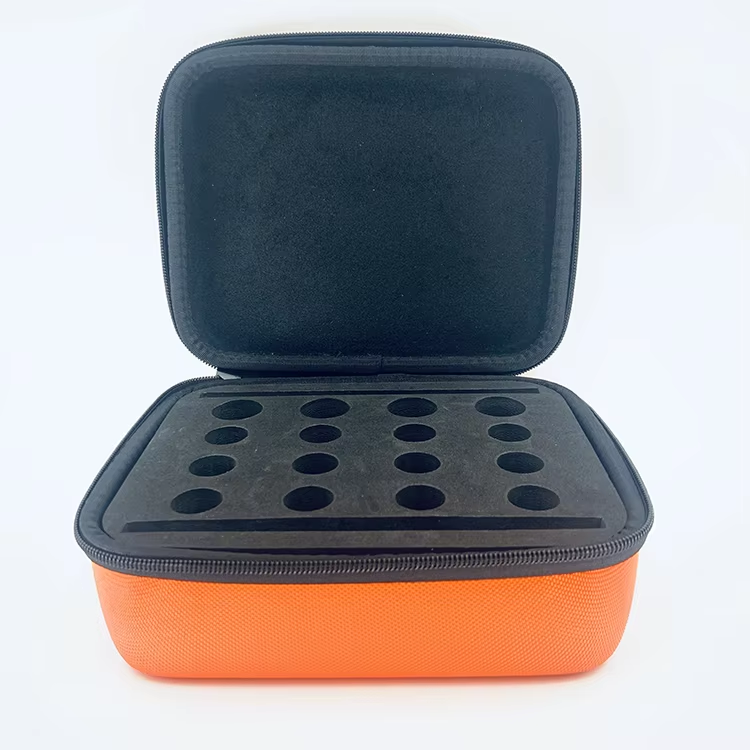
Premium essential oil cases integrate high-density EVA foam liners that absorb kinetic energy during transport, cushioning vials against drops and vibration. Individual, molded compartments prevent glass-on-glass contact—eliminating chipping, cracking, and cross-contamination—while enabling intuitive, rapid access. Leak-proof performance relies on multi-threaded closures and compression-molded silicone gaskets; many models undergo inversion testing to verify seal reliability under stress. Together, these features form a cohesive system: one that safeguards fragile containers, prevents spills, and extends oil usability—whether stowed in a handbag, packed in luggage, or used daily at home.
FAQ Section
Why do essential oils degrade when exposed to light, heat, and air?
Essential oils degrade due to oxidation, evaporation of volatile compounds, and photochemical reactions triggered by exposure to UV light, heat, and air.
What materials are ideal for essential oil storage?
Amber glass is the gold standard for UV protection and oxygen impermeability. Aluminum cases provide additional thermal stability, crush resistance, and complete light blocking.
How can I minimize oxidation and volatile loss of essential oils?
Use airtight seals, limit headspace in bottles, and chose storage cases equipped with materials that block light and restrict air circulation.
What features make a premium essential oil case?
Features such as EVA foam liners, individual compartments, airtight seals, and aluminum casing enhance durability and retain oil potency during daily use and travel.
